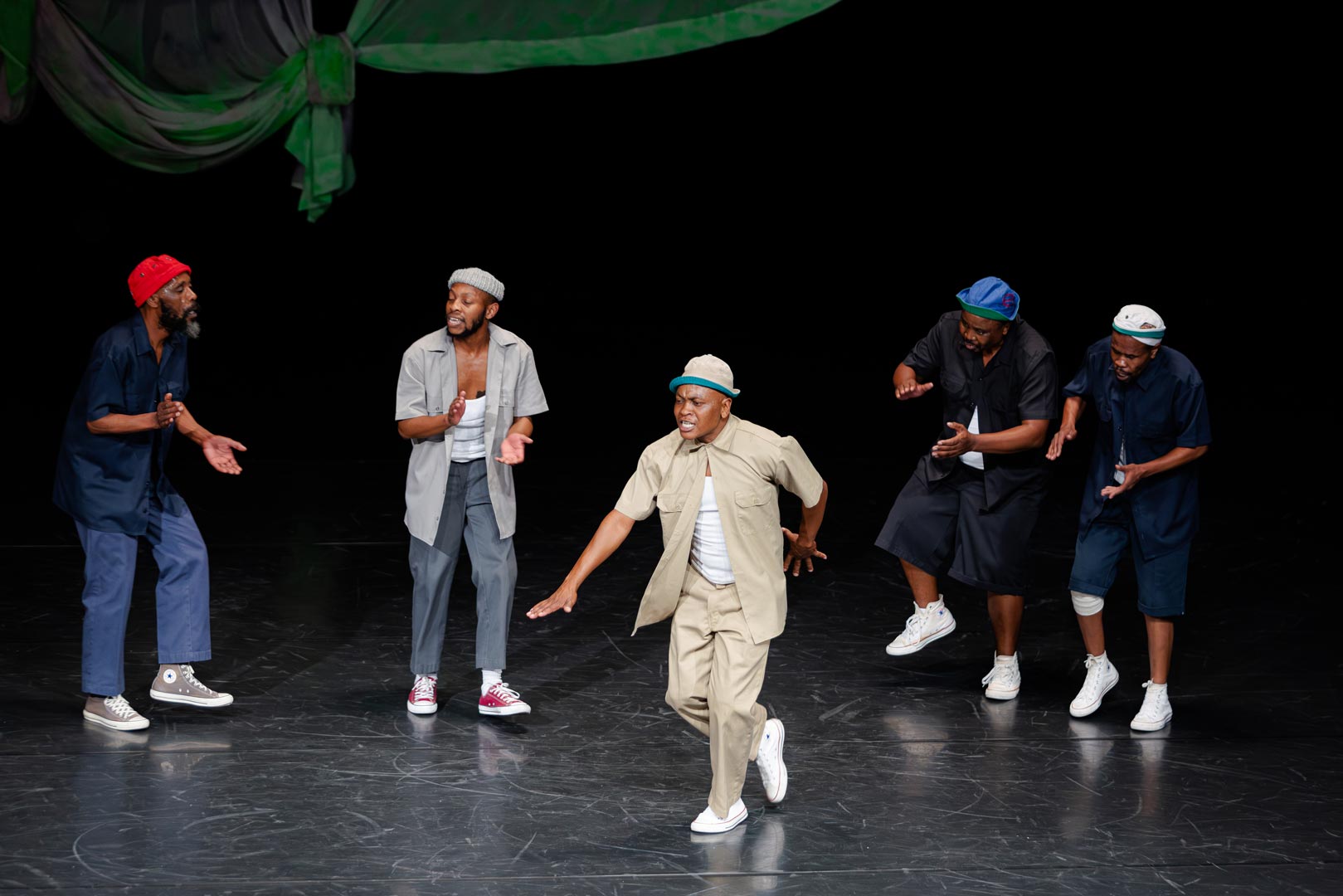
I was so moved by The Ecstatic's joyful rendering of friendship, intimacy, and the holy experience of community—the ways we hold one another through joy and grief, and how that container is both deeply human and undeniably divine. Community is something sacred.
Inspired by Impilo Mapantsula & Jeremy Nedd: The Ecstatic
Inspired by Impilo Mapantsula & Jeremy Nedd: The Ecstatic
When Jonda Valentine was kicked out of her church congregation for coming out as gay, she missed the sense of community she once had there. She decided to create that fellowship for herself and for anyone else who needed it—except, this time, with the kind of all-encompassing love and acceptance she hadn’t found at church.
That’s how The Lipstick Lounge, one of the nation’s last remaining lesbian bars, was born.
“We joked about changing the name to Our Lady of Lipstick so we didn’t have to pay taxes, like a church,” said Christa Suppan, Lipstick’s co-owner, in an interview on Cruising.
The sanctity of The Lipstick Lounge is obvious to anyone who spends time there. They’ve had a choir perform during Sunday brunch. Preachers have done sermons from the karaoke stage. I’ve personally sung the gospel of Shania Twain on that same microphone more times than I can count.
A few months after Lipstick opened, back in 2002, a neighborhood man came by and said he’d been the one to paint the building’s ceiling.
“I put holy water in every corner and said May God’s love always abide in here,” he said. “And it’s abiding in here. I feel God’s love in here more than I’ve ever felt anywhere in my life. More than any church.”
Over 25% of Americans now identify as religiously unaffiliated. Nearly half surveyed cite anti-LGBTQ teachings as a reason for leaving. For most queer people I know, their choice was leaving church or abandoning themselves. In the worst cases, that choice was made for them.
Being forced out of organized religion isn’t the same as rejecting spirituality entirely. There are many people, myself included, who still desire the community, fellowship, and spirituality that church once promised. We’ve just had to seek out new places to find it.
Last weekend, I went to Lipstick for the launch of The Lesbian Bar Chronicles by Rachel Karp. I’d been invited to read a piece about a queer space that shaped me. The room filled with attendees of all ages and genders. Rachel opened the stage for people to share their own stories: your first kiss, first queer love, first time at a gay bar. Sarah of Nashville Queer History gave a presentation on the history of sapphic spaces in the city, reminding us that no matter how much history tries to erase us, we’ve always been here. When a tall man in a cowboy hat told us that a gay club was the first time he ever truly saw himself, I wasn’t the only one in tears.
There was only one word for what it felt like. When I got up on stage, I said: “It feels holy in here tonight.”
•••
Growing up, I felt the divine everywhere. No cathedral could compete with the woods behind my house, wading barefoot into the creek, or reading in my treehouse. But as I got older, I learned that the sacred belonged to a specific place: church. I limited my seeking to the channels that were allowed. My awe shrunk to the size of a sanctuary.
I lived in constant fear of the Rapture, Christ’s second coming, the prophesied apocalypse when believers would ascend to heaven and everyone else would be damned to hell. I monitored my thoughts hour by hour, measuring my wickedness, wondering if it was enough to damn me. But sin was a slippery thing. What felt right was often bad. Things that felt wrong—like condemning gay people or the scared-straight gospel scripts we were taught—were actually good.
When my best friend came out to me as gay in college, I responded with the script I’d been taught: “God’s design for marriage is between a man and a woman.” My cheeks were hot. My vision blackened at the edges. It felt so wrong—violent, even—which is how I knew it was right. If I really loved her, I had to do whatever it took to keep her from going to hell. I would hurt her if that was what was required.
You can’t enact that kind of violence without cutting off some part of yourself. I was living in a world that required these acts of violence. It required complete disavowal and abandonment not only of the ones I loved, but of myself. Nothing about that felt sacred.
Religion that requires a fundamental rending of one’s own humanity to reach heaven? Sounds a lot like hell to me.
Years later, I would apologize to my best friend and they would forgive me.
Just a few years after that, I called them for outfit advice before my first date with a woman. The irony wasn’t lost on us. Back then, I thought self-abandonment was the only way to access the sacred. I thought my friend needed to change to draw closer to god. It took me almost a decade to realize where the divine really dwells.
As my best friend helped me pick out jewelry and shoes over FaceTime, I understood what Martin Buber meant when he said: “When two people relate to each other authentically and humanly, God is the electricity that surges between them.’
•••
I’ve been thinking a lot about what makes something holy.
The question has fascinated me since I was a student studying abroad in Rome and walking into cathedral after cathedral full of holy relics and sacred objects. Enshrined in glass and illuminated with golden light were fragments of bone, wood, marble. Pieces of the manger, the finger of Doubting Thomas. These things are made holy by their (sometimes dubious) connection to the sacred. But also, I thought, by the sustained reverence given to them. Their holiness came from our attention. Our presence.
Growing up in church, “secular” was essentially synonymous with evil. To be secular meant to be worldly. Wicked. But in martha park’s wonderful The World Without End, I learned the real meaning of secular.
“Augustine defined the present moment—somewhere between God’s entrance into the world and Christ’s second coming—as the saeculum, from which we get the word secular.”
Not wicked or worldly, as I’d thought, but present. In the church, we were told that this world is not our home. The ask was to keep our minds upon the divine, rather than this present moment. As if the divine could exist anywhere else other than the holy here-and-now.
I thought about that during The Queer Love Project storytelling night that I co-hosted this April alongside Jerry Portwood. Storytellers shared intimate stories of queer love, belonging, and community. In the backyard, in folding chairs under string lights, people shared their experiences with vulnerability and humor and an audience paid them reverent attention.
At the end of the night, one of the attendees came up to me and said, “This must be what church feels like for other people.”
•••
I no longer fear the rapture. These days, I fear a different type of apocalypse when I read headlines about ICE raids and attacks on trans rights, the genocide in Gaza, nuclear war and Nuclear Family Day. There is, indeed, a mass erasure being attempted. It’s just not the one that was promised.
The Bible describes longing for heaven as a deep, inherent yearning for the presence of God and a release from the sufferings of the present world. Queer theorist José Esteban Muñoz describes queerness as a longing, too:
“Queerness is a longing that propels us onward. Queerness is that thing that lets us feel that this world is not enough, that indeed something is missing…. Queerness is essentially about the rejection of a here and now and an insistence on potentiality or concrete possibility for another world.”
Queerness asks us to imagine a world beyond the one we know when what we long for does not yet exist. It says, at once: This world is not enough. But it could be.
At a glance, these perspectives don’t seem so different. Both reflect a longing for a world that is not yet here. Except the difference is this: with queerness, we understand that this is the only world in which that utopia will happen and we are the only ones who can bring it into being.
Despite immense despair in the world, there’s so much hope happening at a local level. I’ve seen it in Nashville: from the bench project which insists that everyone has a right to move through our city with dignity, hundreds of thousands rallying against proposed data centers, places like Lipstick becoming a literal refuge for those in need, people like Jonda and Christa creating the space they wished they had.
That’s what it looks like to stop waiting on heaven. Heaven, if it exists, is a community of people working together toward the utopia we long for; with our hands, bringing it into being. Heaven is a place on earth.
•••
I thought leaving the church meant I would have to leave the sacred behind, but the opposite happened: my sense of awe grew big again.
I felt it around dinner tables and at the river and digging in a mud puddle with my nephew. I found it in poetry and out the windows of a plane. Singing at Lipstick and sharing stories under string lights. I felt it in myself, a still and quiet voice that had always been with me.
When the container disappeared, everything became holy.