
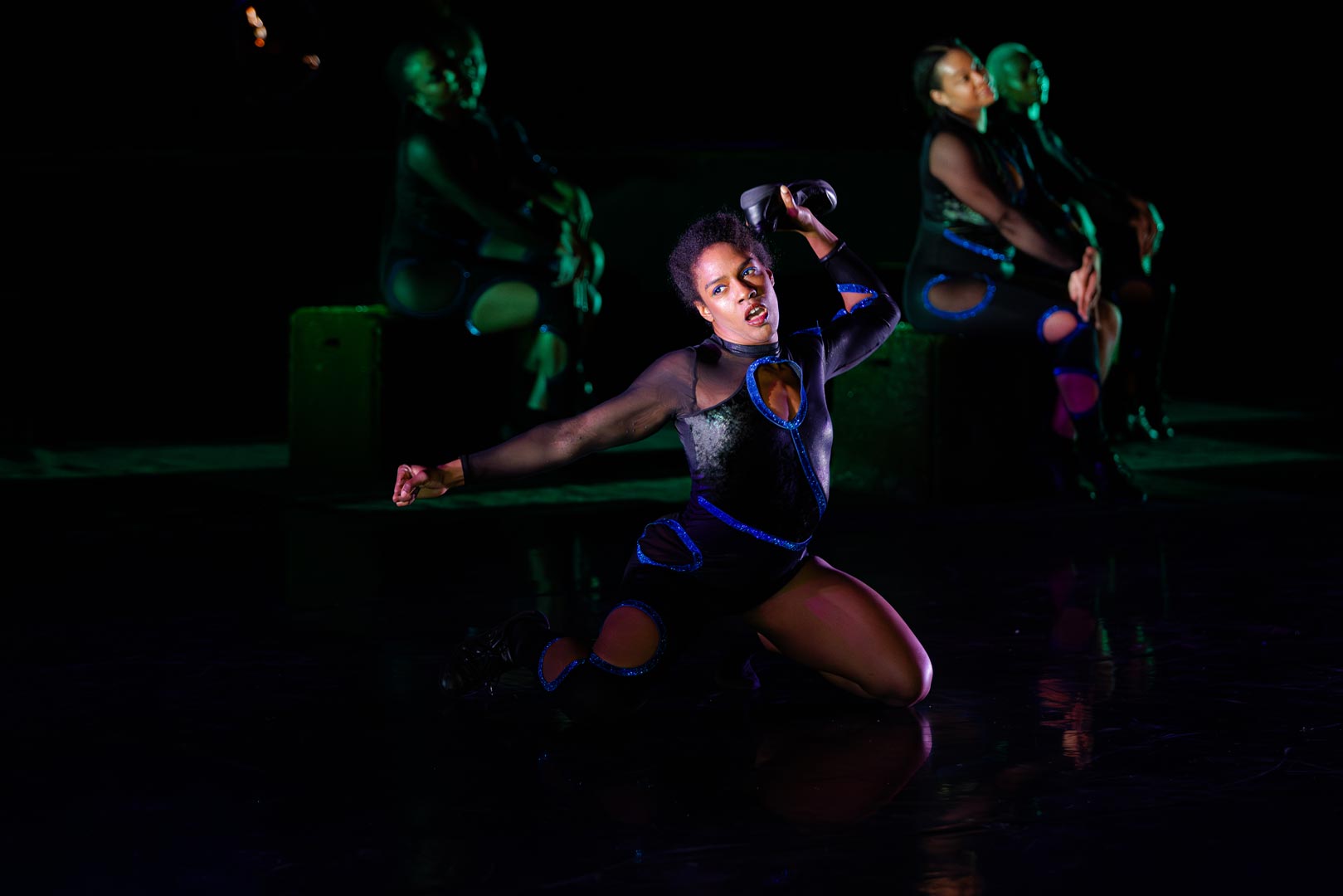
There was a moment when two dancers were on opposite sides of the risers, trying impossibly to mimic each other's movements. It reminded me of those fleeting youthful relationships you can't get back.
Inspired by Major
Inspired by Major
When Zachary Lakes and I were nine, we believed in accumulation.
Each Thursday after school, our mothers dropped us at Mr. Gatti's. It was Double Ticket Thursday. We fed tokens into blinking arcade machines, and they spat out tickets in long paper streams. We stored ours in separate gallon-sized Ziplocs, sealed at the top, our names written in Sharpie.
"We're not spending them," Zachary would say, looking up at the high shelves where the prizes lived: a lava lamp, a plastic traffic light, a laser tag set in a box so large we'd have to carry it between us. We were saving for something luminous, something that would prove our friendship.
In his basement we built obstacle courses from couch cushions and shot each other with Nerf darts. In his backyard we drove a battery-powered Jeep in wide circles across the hill between our houses. We mimicked each other's moves, fluent in a language that required proximity.
When Zach's dad got a new job, a For Sale sign appeared in their yard.
We were ten.
At Mr. Gatti's, we counted our tickets at a sticky table. We had almost enough for the laser tag set.
"Should we just get something smaller?" I asked.
He shook his head.
"No. We'll come back for it."
*
After Zach left, boys became something else. In locker rooms I learned to shrink. I kept my head down while towels snapped and laughter ricocheted off tile. I felt boys looking at me. Whispering my name.
I quit basketball. Soccer I kept because it was coed, because girls felt like a buffer. But even there, I felt the distance opening. Their bodies changed in ways that stirred something electric and frightening in me. I was drawn to them while knowing that attraction was a liability.
Men felt unsafe. They were the ones who noticed, who named, who mocked.
I mastered the art of getting in and getting out.
Did they get that?
Did they see me?
Did they hear me?
*
At thirty-three, I am trying to relearn the steps.
In North Carolina, I sometimes spent evenings with two straight friends. We called it Boys Night, half-joking. We sat in bars and talked about work, movies, and the strange pressures of being men in a world that pretends not to press on us.
The conversation moved differently than it did with my women friends. Feelings surfaced sideways.
I liked the steadiness of their presence, the way silence could exist without needing explanation. I also felt the old electricity humming beneath the table: awareness, attraction, history. Wanting connection while remaining alert to danger.
Sometimes I left those nights wondering whether I had been fully seen or whether I had performed a version of myself that kept everything smooth.
*
I am nine and thirty-two at once.
The pizza buffet glows. The prize shelves hover above us, unreachable.
Zach shows me some elaborate laser tag strategy, how to crouch and pivot without being tagged. I mimic him. We laugh.
Then we step to opposite ends of the stage.
He stands in his new town, wherever that is. I stand in a locker room at fourteen, then a bar at thirty-three. The lights dim between us.
"Did you get that?" he calls, demonstrating something with his hands.
I can barely see him.
"Can you see me?" I shout back.
I try to show him what happened after he left: the way boys' laughter turned sharp, the way I folded myself smaller. I try to show him the careful choreography of adult friendship, the measured steps toward trust.
He squints across the dark.
"What?" he says. "Do it again."
My voice thins in the distance. Puberty sits between us like a wall of glass. So do shame and desire.
We keep dancing anyway. We mimic what we can make out: an arm lifted, a pivot, a wave. We talk over each other. Our timing is off.
But underneath the misfires, memory lives in the muscles.
Memory remembers what came before fear.
It remembers accumulating tickets beside someone you trusted. It remembers believing you could always come back for the big prize.
Reconnection is not seamless. It is a call across distance.
If I could speak to the boy counting tickets, I would not promise that men become easy. I would not promise that attraction untangles itself from fear. I would not promise every choreography lands.
I would remind him of something he once knew.
There was a time when you could look at another boy and see only a partner in the game.
That knowledge is not gone.
Ask anyway:
Did you get that?
Can you see me?
Can you hear me?